Nairobi, Kenya – 23rd March, 2026
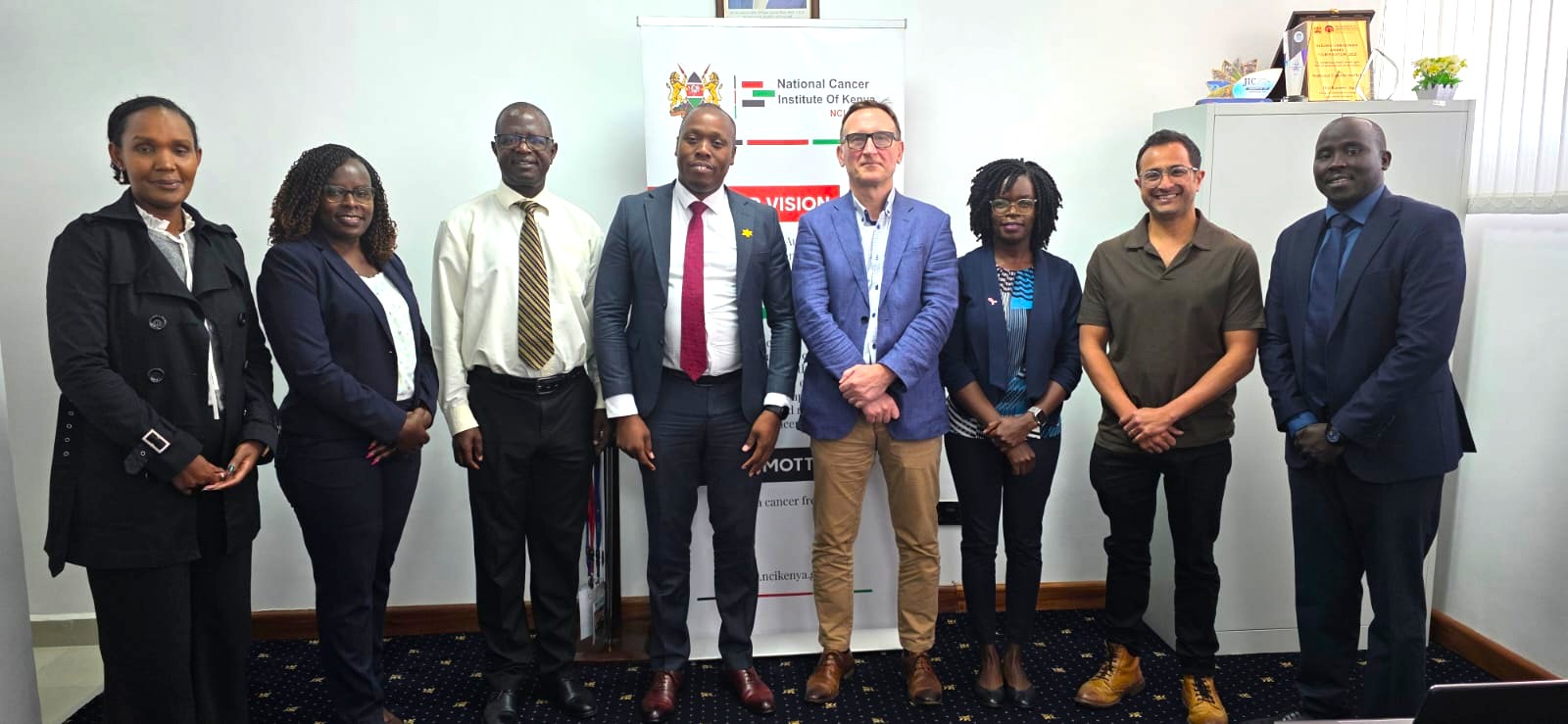
Today, the National Cancer Institute of Kenya received a courtesy call from a team of cancer research and clinical experts.
The team included Prof. Sacha Howell of Manchester University NHS Foundation Trust, who leads the Breast Cancer Risk Prediction and Prevention Service and is a Senior Consultant at The Christie NHS Foundation Trust. He was accompanied by Mr. Rajiv Dave, a Breast Surgeon at the University of Manchester, Dr. Francis Makokha, Head of the Human Health Research Program at Mount Kenya University, and a specialist in molecular medicine and cancer genetics, alongside Dr. Bahati Riogi, an oncoplastic surgeon at Kisii Teaching and Referral Hospital.
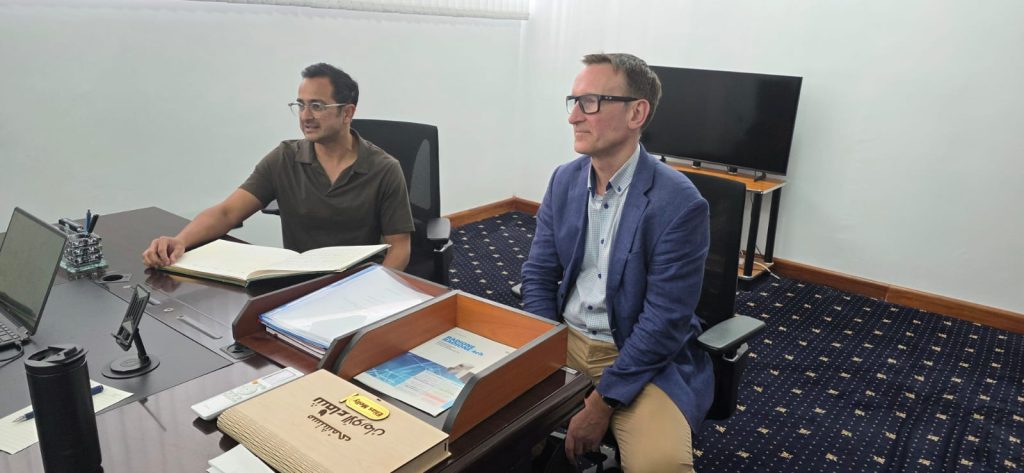
The meeting, led by the CEO, Dr. Elias Melly, focused on strengthening collaboration in cancer research and data systems, particularly in advancing the national cancer registry and evidence generation.
NCI-K continues to play a central role in strengthening cancer data through the National Cancer Registry (NaCaRe) and in supporting locally driven research. Under the leadership of Dr. Melly, the Institute has prioritized investment in research that reflects Kenya’s unique population dynamics, recognizing that genetic variations across populations—and even across regions within the country—have significant implications for cancer prevention, diagnosis, and treatment. This focus on local research is critical in generating context-specific evidence to inform policy, improve clinical outcomes, and guide targeted interventions.
NCI-K staff present included Gladys Chesumbai, Head of Cancer Registry; Dr. Joan Simam, Head of Research and Data Informatics; Linet Koskei, Head of Information, Education and Communication; Julius Kibichii, Biostatistician; and Hillary Chang’, Cancer Registrar.
Prof. Howell highlighted his research on endocrine therapy in the treatment and prevention of breast cancer, as well as innovative approaches to risk prediction. Among his projects is the creation of platforms that use imaging and serial breast biopsies to investigate preventive measures in high-risk groups. Through these approaches, significant progress is being made in understanding the mechanisms of action and resistance associated with both existing and emerging breast cancer prevention therapies.
Further collaborative research, particularly with scientists at the Manchester Breast Centre, is advancing understanding of how mammographic density contributes to cellular transformation, offering new insights into early cancer development and prevention. It also highlights the strategic importance of partnerships in strengthening cancer data systems, advancing research, and improving patient outcomes in Kenya.
Leave a Reply