Arusha, Tanzania | 14–16 October 2026
The Chief Executive Officer of the National Cancer Institute of Kenya (NCI-K), Dr. Elias Melly, delivered a keynote address at the IACR–AFCRN–NORA Scientific Conference held at Mount Meru Hotel in Arusha, Tanzania, from 14 to 16 October 2026.
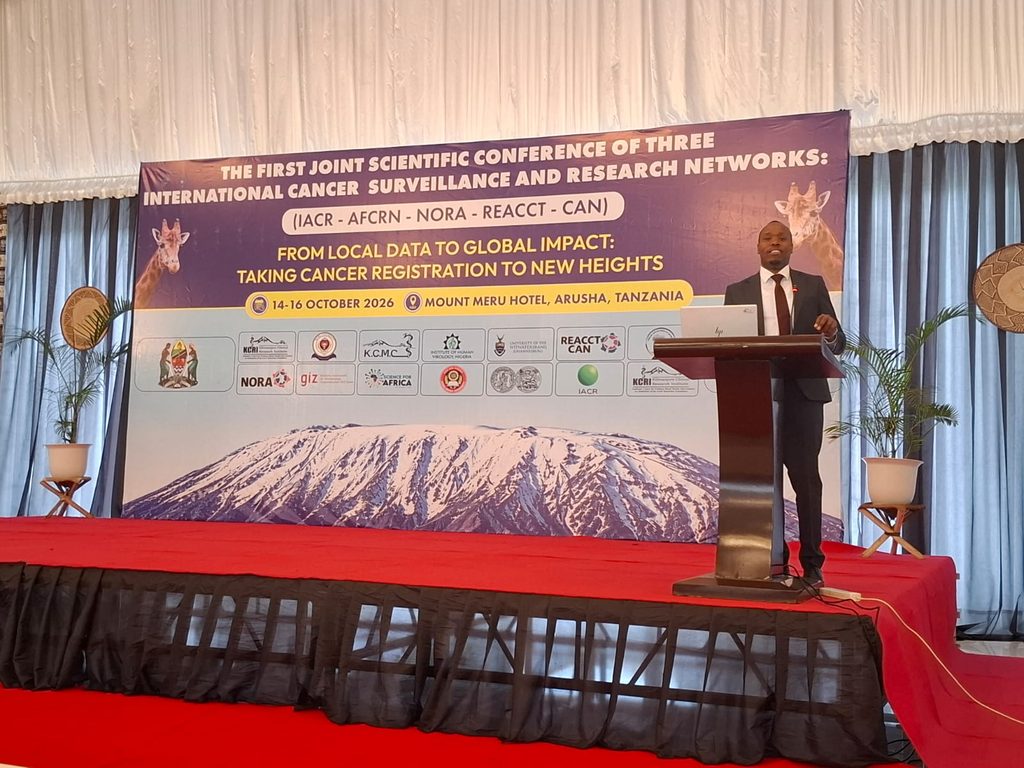
NCI-K CEO, Dr. Elias Melly Delivery his Keynote Address at the IACR, Tanzania.
Dr. Melly was featured as the keynote speaker on the opening day of the conference, on 14 October 2026, underscoring Kenya’s participation in regional and international efforts to strengthen cancer prevention and control through research, reliable cancer data and effective surveillance systems.
The scientific conference brought together cancer registry professionals, researchers and public health experts to share scientific evidence, exchange knowledge and discuss approaches to improving cancer registration, surveillance, research and the use of cancer data to inform policy and public health interventions.
Strengthening Regional and International Partnerships in Cancer Control
The conference provided a platform for collaboration among the International Association of Cancer Registries (IACR), the African Cancer Registry Network (AFCRN) and NORA, alongside scientific sessions involving NORA–REACCT–CAN. These collaborative platforms brought together expertise and research from across Africa and other regions to address shared challenges in cancer registration and control.
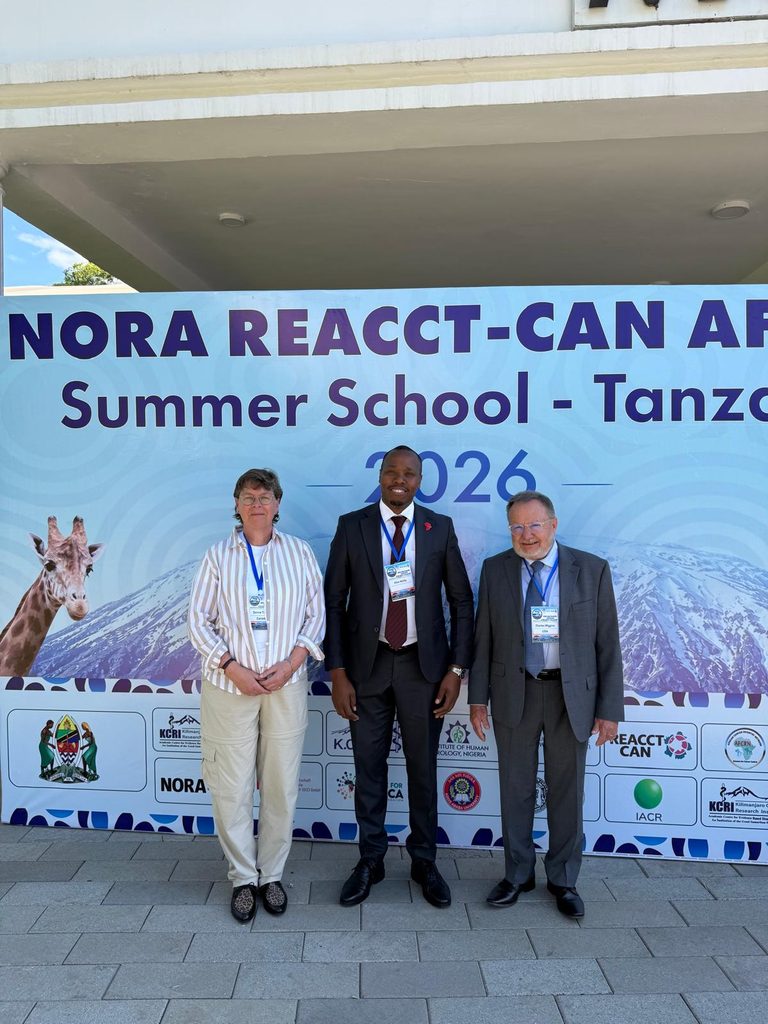
Dr. Melly (centre)with outgoing IACR President, Dr. Charles Wiggins (right), and the incoming president, Dr. Dabber Wanna (left)
For NCI-K, participation in such regional and international scientific engagements reinforces the importance of partnerships in strengthening cancer surveillance, building institutional capacity and generating evidence to guide national cancer control priorities.
Effective cancer control depends on access to quality, timely and reliable data on cancer incidence, mortality, survival and patterns of diagnosis. Strong cancer registration systems help governments and health institutions understand the burden of cancer, identify gaps in services, plan interventions and assess progress in prevention, early detection, treatment and care.
The conference programme featured discussions on population-based cancer registration, cancer registry governance and standards, data quality and accessibility, cervical cancer screening, cancer survival, and translating registry data into policy and public health action.
Kenya Advances National Childhood Cancer Registry Development
Kenya’s contribution to the scientific programme also featured work towards strengthening childhood cancer surveillance. On 15 October 2026, Gladys Chesumbai, Head of the National Cancer Registry at the National Cancer Institute of Kenya presented on “Delphi Consensus for a Standardized National Childhood Cancer Registry Minimum Dataset in Kenya.”
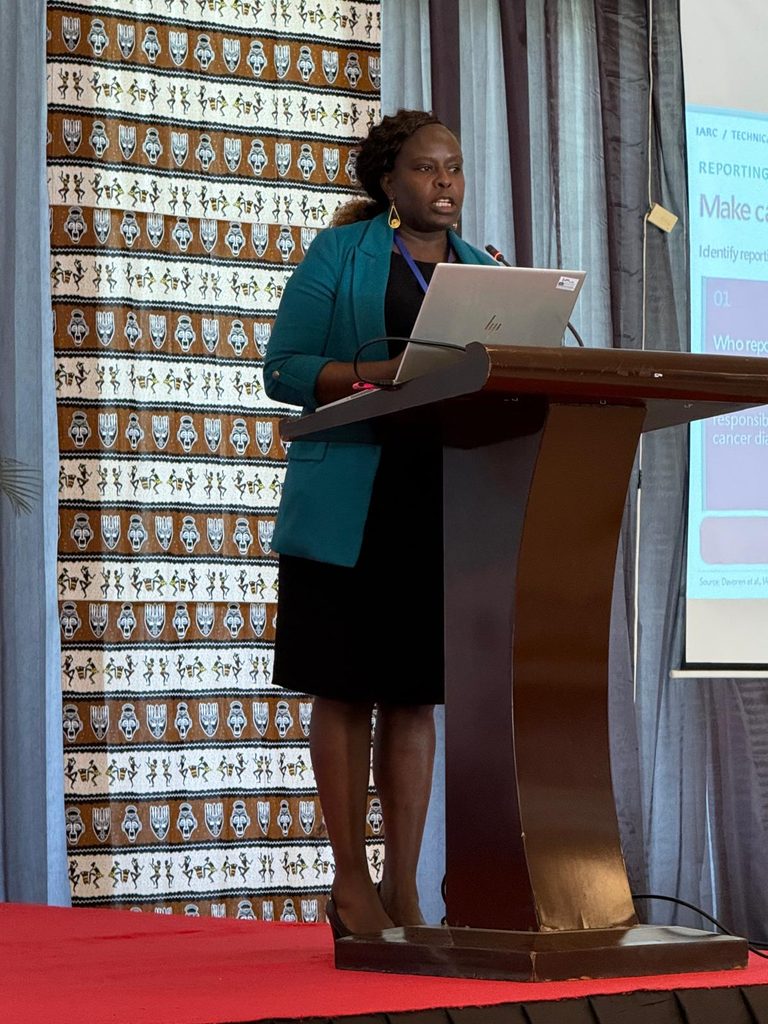
Gladys Chesumbai, Head of Cancer Registry at NCI-K.
The presentation formed part of a plenary session examining the burden of childhood, adolescent and early-onset cancers. Standardising the minimum dataset for a national childhood cancer registry is an important area of work in strengthening the consistency and quality of information collected on childhood cancers.
Reliable childhood cancer data can support a better understanding of the disease burden, inform research and planning, and provide an evidence base for decisions aimed at improving services for children affected by cancer.
Kenya’s participation in this scientific exchange highlights the value of sharing national experiences and learning from international expertise as the country advances its cancer surveillance and registry development agenda.
Advancing the National Cancer Control Agenda Through Collaboration
The conference’s focus on cancer registration, research, data standards and evidence-informed decision-making aligns with the broader need for coordinated approaches to cancer prevention and control across the region.
As a statutory body established under the Cancer Prevention and Control Act, No. 15 of 2012, NCI-K is mandated to spearhead and coordinate cancer prevention and control in Kenya through the implementation of the National Cancer Control Strategy.
Engagement in regional and international platforms enables the Institute to participate in scientific discussions, strengthen professional networks and contribute to collective efforts to improve cancer information systems and public health responses.
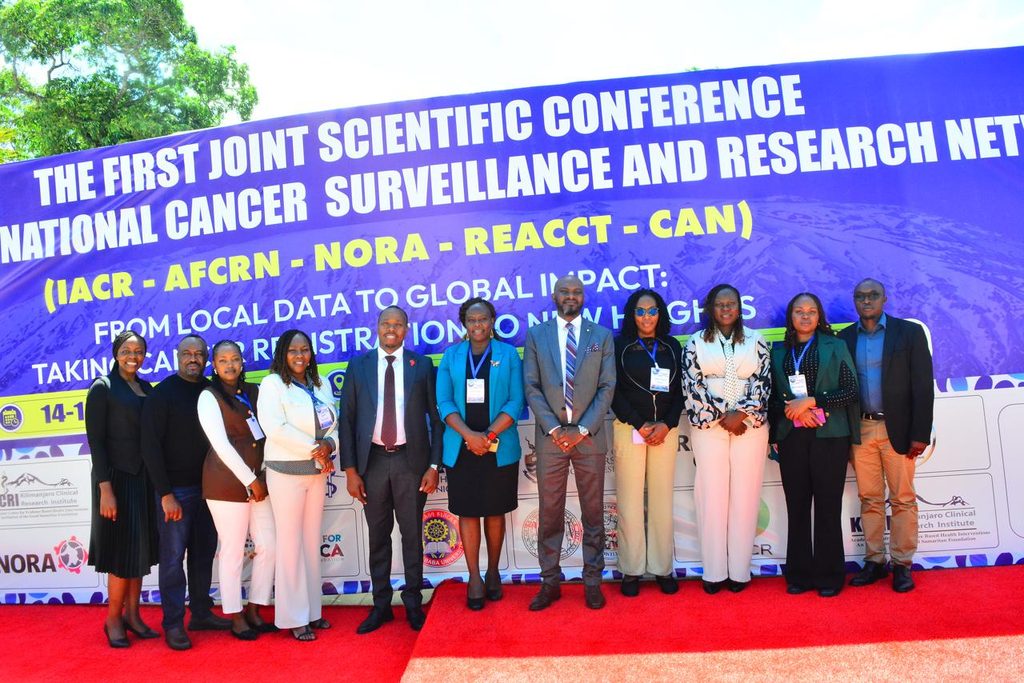
Through continued collaboration with national, regional and international stakeholders, NCI-K remains committed to advancing evidence-informed cancer control and supporting efforts towards a cancer-free nation.